Thinking about buying land in Chattahoochee Hills but not sure where to start? You’re not alone. Land deals feel different from home purchases, and the details can make or break your plan. In this guide, you’ll learn how to evaluate a parcel, confirm what you can build, estimate costs, and decide whether to hold or build. You’ll also get a clear path for approvals and local contacts so you can move forward with confidence. Let’s dive in.
Why Chattahoochee Hills land stands out
Chattahoochee Hills sits in Fulton County and offers a semi-rural setting with a conservation mindset. The area blends privately held acreage with conservation-oriented communities like Serenbe. That character supports lifestyle buyers as well as investors who value privacy, recreation, or one-home build opportunities.
Local rules matter here. The city’s zoning and any Fulton County requirements guide setbacks, uses, minimum lot sizes, and open space. Those rules shape whether a parcel is buildable, subdividable, or best held for recreation or long-term appreciation. Always confirm which permits are issued by the City of Chattahoochee Hills versus Fulton County before you proceed.
Step 1: Confirm access and road status
Legal access and maintenance
- Verify recorded public road frontage or a recorded easement shown on the deed and plat.
- Identify who maintains the road, such as the city, county, a private association, or owners.
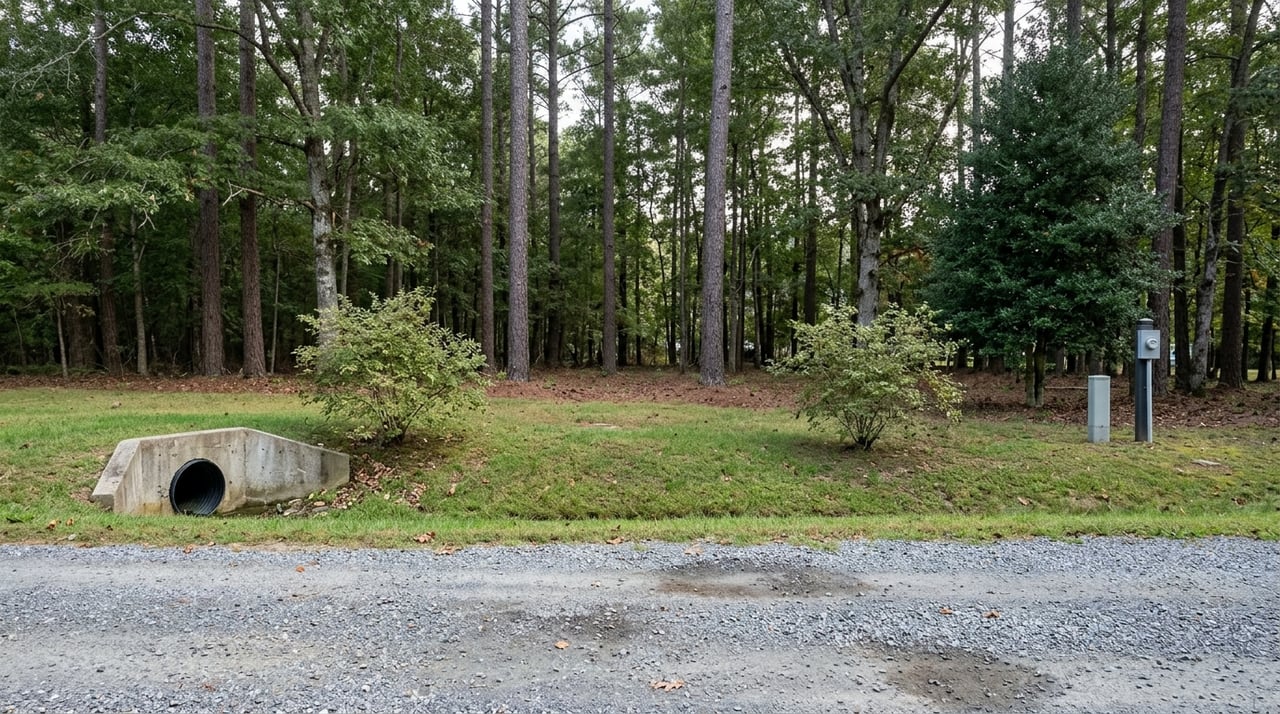
- Note surface type and condition. Long private drives or rough access can add cost and reduce buyer demand.
Why it matters
- No clear, legal access can block financing and sink resale value.
- Required road upgrades or culverts can meaningfully change your budget and timeline.
For property records and plats, start with Fulton County’s official website and the City of Chattahoochee Hills.
Step 2: Read the land: topography, soils, and water
Key checks
- Slope and terrain that affect the buildable area and grading costs.
- Soils and septic suitability. Use the USDA NRCS Web Soil Survey for a first look, then plan for a perc test.
- Wet spots, streams, and riparian buffers that limit clearing or placement of a home.
What it means for you
- Poor soils or steep slopes can require engineered septic or major grading.
- Wetlands and buffers reduce developable acreage and may require permits.
Step 3: Screen floodplain and wetlands early
Step 4: Verify utilities and serviceability
What to confirm
- Electricity: proximity to existing distribution lines and cost to extend service.
- Water: municipal line availability versus well requirements.
- Sewer: access to public sewer or feasibility of a septic system.
- Telecom: broadband, DSL, or cable options that affect marketability.
- Easements and any utility corridors across the site.
Why it matters
Utility extensions, wells, and septic systems are often the largest site costs on rural lots. Contact local providers, the city, and Fulton County water/sewer staff early. For site work, remember to use Georgia 811 to locate underground utilities before digging.
Step 5: Title, easements, and covenants
- Order a title commitment and review all recorded easements, including utility, access, conservation, and drainage.
- Confirm any deed restrictions or HOA covenants that limit use or building style.
- Verify mineral or timber rights and check for outstanding liens.
Conservation easements and rural-preservation tools are common in this area. These can reduce or prohibit development, so get clarity in writing.
Step 6: Zoning and future land use
- Check current zoning, permitted uses, setbacks, and minimum lot size with city planning.
- Review the city and county future land use maps for long-term alignment with your plan.
- Ask whether any overlay districts, conservation requirements, or planned unit developments apply.
Start with the City of Chattahoochee Hills planning and zoning resources, and coordinate with Fulton County as needed. Zoning determines what you can build and the steps to get there.
Step 7: Permits, sequencing, and timing
Typical steps for a single-home build
- Boundary survey and site plan.
- Septic evaluation and permit if no sewer, coordinated through Fulton County’s health authorities.
- Erosion and Sediment Control and stormwater compliance per the Georgia Environmental Protection Division.
- Driveway or right-of-way permits if accessing a public road.
- Building permit after site approvals are in place.
Timelines to expect
- Due diligence for a simple buy-and-hold can fit in 30 to 60 days.
- Perc and septic feasibility may take weeks to a couple of months.
- Utility extensions often take weeks to months depending on distance and provider workload.
- Full entitlement, site work, and a custom build can run many months to a few years depending on complexity.
Underwrite two paths: hold or build
Scenario A: Buy and hold
- Purpose: long-term appreciation, recreational use, timber income, or resale.
- Focus: entry price, carrying costs, and exit timing.
Scenario B: Prepare and build
- Purpose: create an improved lot or a finished home to sell or occupy.
- Focus: site work, utilities, permitting, and construction cost control.
Inputs to collect for both
- Acquisition costs: price, closing costs, and title insurance.
- Carry costs: property taxes, insurance, and basic maintenance.
- Entitlement/site prep: survey, engineering, perc and soil tests, grading, driveway and culverts, utility connection fees, erosion control, and any tap or impact fees.
- Construction: hard costs per square foot, builder overhead, and a 10 to 20 percent contingency.
- Financing: land or construction loan terms, interest carry during approvals and build.
- Revenue assumptions: likely resale price of the raw lot, improved lot, or finished home; timing of sale.
Run the numbers
- Hold: estimate annual cash-on-cash return and the total return at sale after all costs.
- Build: total project cost equals acquisition, site work, construction, financing, carrying, and sales costs. Compare to expected sale price to find your margin and ROI.
- Break-even: calculate the minimum price needed to recover your total investment if you sell an improved lot or home.
Stress test your plan
- Add time to approvals and construction.
- Increase utility extension distances and fees.
- Assume a septic upgrade if standard systems do not pass.
- Test higher local construction costs per square foot.
Budget signposts and red flags
Costs with the biggest swings
- Utility extensions for power, water, and sewer, especially across long distances or under roads.
- Septic systems that require engineered designs due to marginal soils or high water tables.
- Driveway construction, culverts, and any required road improvements.
Financing realities
- Land loans usually require larger down payments and carry higher interest rates than mortgages.
- Construction financing often requires approved plans and a licensed builder.
Red flags to pause on
- No recorded access or unresolved easement disputes.
- Floodplain or wetlands removing most of the buildable area.
- Septic infeasibility or failed perc tests.
- Conservation easements or deed restrictions that prohibit intended uses.
- Utility extensions that push the project beyond reasonable budgets.
A simple 30–60 day due diligence plan
- Day 1–7: Open title, order a boundary survey, pull the deed and plat, and review zoning basics with city planning.
- Day 7–21: Run quick screens on FEMA flood maps, NRCS soils, and the National Wetlands Inventory. Schedule perc testing if you plan to build.
- Day 14–30: Request preliminary utility estimates, confirm road standards and driveway permits, and get ballpark site work numbers from a local civil engineer.
- Day 30–60: Finalize underwriting, add contingencies for soils, utilities, and permitting time, and align your exit strategy with the local timeline.
How our team supports your plan
You deserve a clear path and a calm process. Our team pairs local land expertise with a concierge approach, so you can make decisions with confidence. We help you gather comps, coordinate the right local surveyors and engineers, and keep your due diligence on track from access to septic.
When you are ready to explore parcels or pressure-test a deal, connect with RE/MAX Concierge for responsive, local guidance.
FAQs
How do I confirm legal access for a Chattahoochee Hills parcel?
- Review the deed and plat for road frontage or a recorded easement, then validate with a title commitment and a current survey.
Can I build if the property does not have sewer service?
- Often yes if Fulton County approves a septic system after perc testing, though marginal soils may require engineered systems or limit buildability.
Who usually pays for new utility extensions on rural lots?
- Buyers or developers typically pay for extensions and any tap or impact fees, so request estimates from providers early in due diligence.
What extra costs should I budget beyond the land purchase price?
- Plan for taxes, insurance, survey and engineering, soils and septic testing, driveway and grading, utility fees, permitting, and a contingency buffer.
How long does it take to permit and build a single home locally?
- Expect weeks to months for septic and utility steps and many months to a few years from entitlement through construction depending on complexity.